Padel vs. Tennis: What’s the Real Difference?
At first glance, padel and tennis could look very similar. Both are racquet sports. Both are played on marked courts. Both demand agility, timing, and focus.
But once you step onto the court, the experience feels completely different. The difference isn’t just technical — it’s cultural, social, and even emotional.
So what really sets them apart?
The Court Changes Everything
Tennis is played on a large, open court. There’s space to cover, long sprints to chase, and powerful serves that dominate the pace of the game. It rewards strength, precision, and endurance.
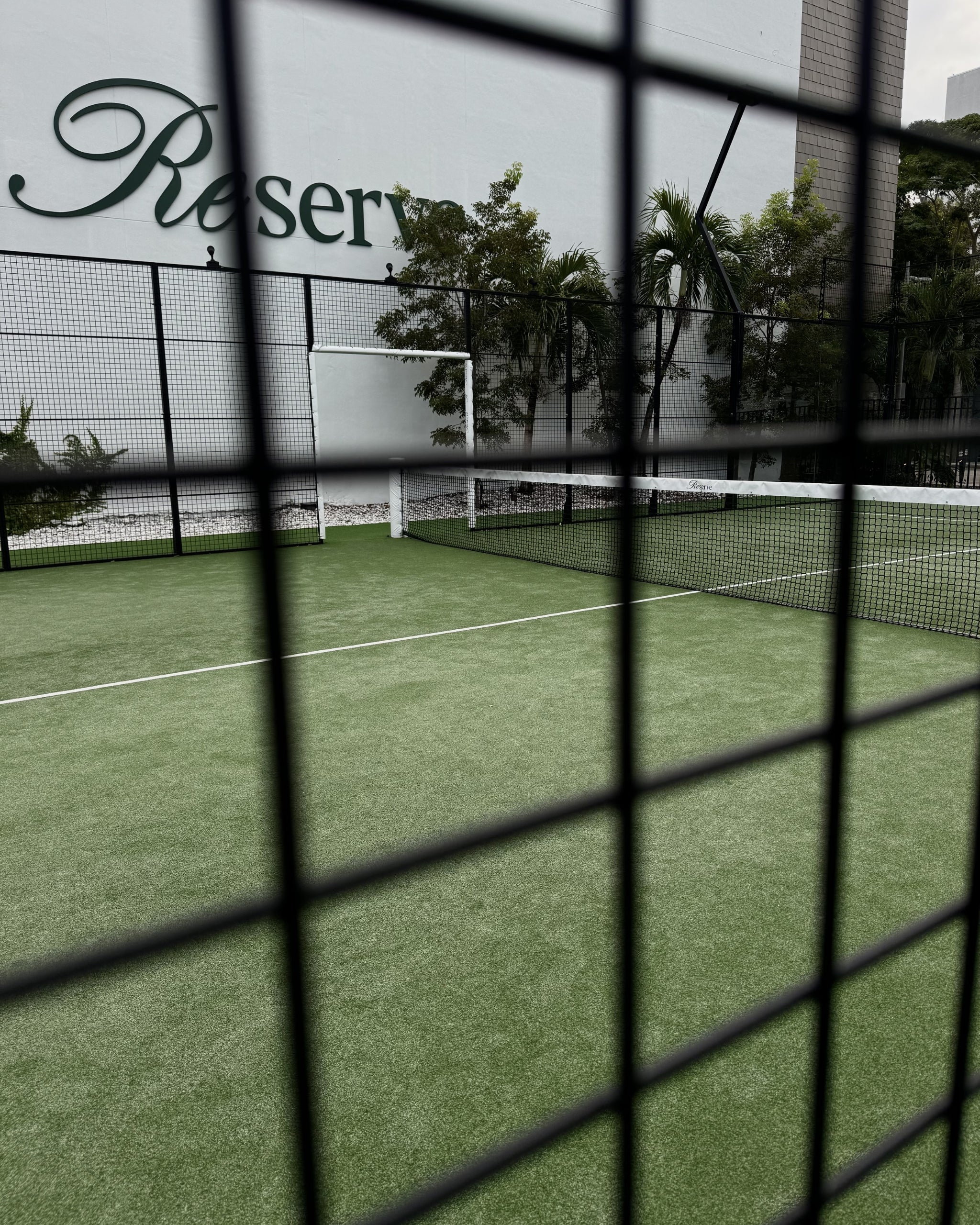
Padel, on the other hand, is played on a smaller, enclosed court surrounded by glass walls. And those walls aren’t just decoration — they’re part of the game. The ball can rebound, creating longer rallies and more dynamic exchanges.
Tennis feels expansive and structured. Padel feels fast, reactive, and surprisingly playful.

Accessibility & Learning Curve
Tennis has a reputation for being difficult to master — especially the serve. Many beginners struggle to maintain rallies in their first sessions.
Padel is different. The underhand serve makes the game easier to pick up, and the smaller court keeps players engaged almost immediately. Even first-timers can sustain rallies and enjoy competitive moments from the start.
That accessibility is one of the biggest reasons padel is growing so rapidly worldwide. It’s competitive without being intimidating.
You don’t need years of practice to feel confident on the court.
Physical Demand
Tennis is powerful. It requires explosive movement, long-distance coverage, and intense upper-body engagement — especially through serving.
Padel is equally demanding, but in a different way. It emphasizes quick reactions, lateral movement, coordination, and strategic positioning. The rallies are often longer, the pace is continuous, and the cardiovascular burn is real — yet it tends to be easier on the joints due to the smaller court.
For many women who combine strength training or Pilates with racquet sports, padel feels like the perfect complement. It builds endurance and agility without excessive strain.
The Social Element
This might be the most important difference.
Tennis is often played one-on-one. It can feel solitary and highly competitive. There’s beauty in that focus, but it’s more individual.
Padel is almost always played in doubles. That changes the atmosphere entirely.
You communicate constantly. You rotate partners. You celebrate points together. You laugh more. The dynamic is collaborative rather than purely competitive.
In a time when fitness is increasingly about connection and community, padel fits naturally into modern lifestyle culture.
Culture & Aesthetic

Tennis carries tradition — heritage clubs, all-white uniforms, established tournaments. It feels classic.
Padel feels current.
Glass courts at sunset. Boutique clubs. Coffee after matches. Community events. A sport that blends effortlessly into social life.
From Dubai to Marbella to Miami, padel has become more than a workout — it’s part of a lifestyle. It sits comfortably between sport, wellness, and fashion.
So Which One Is Better?
It depends on what you’re looking for.
If you love tradition, individual challenge, and powerful play, tennis delivers a timeless experience. If you value social energy, fast-paced rallies, and a sport that integrates seamlessly into your lifestyle, padel may feel more aligned.
Tennis built the legacy. Padel is building the movement.
And in 2026, as fitness becomes more social, aesthetic, and experience-driven, it’s easy to see why more women are stepping onto glass courts.